
On this page
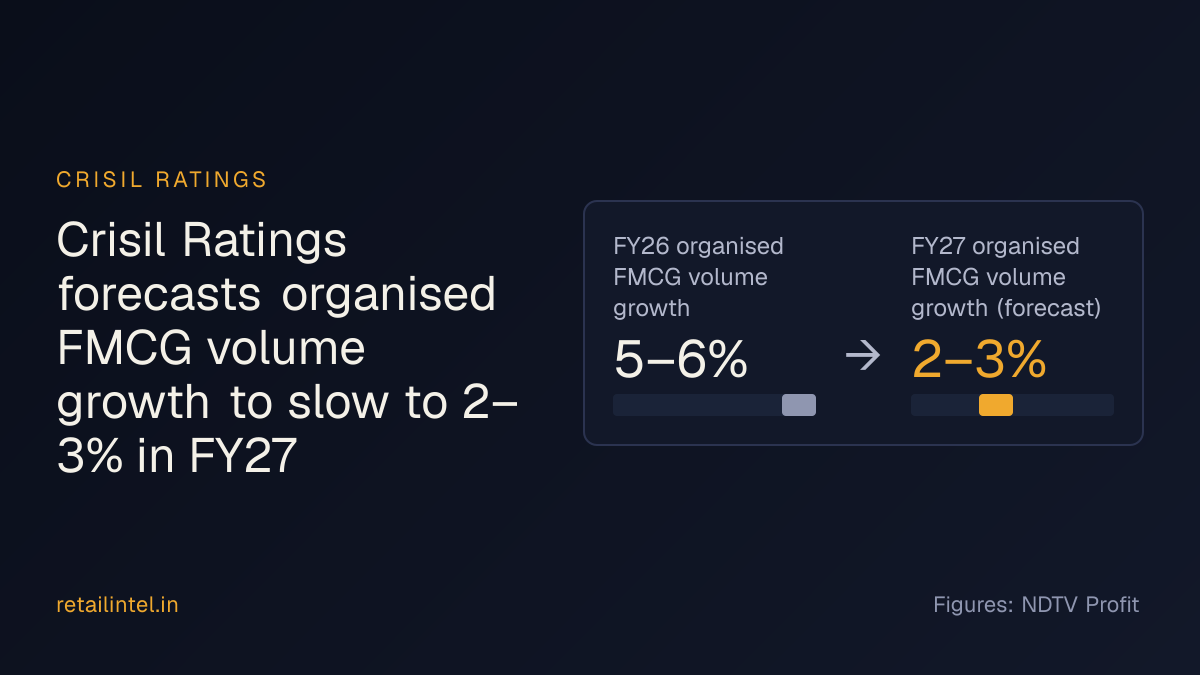
Crisil Ratings forecasts organised FMCG volume growth to slow to 2–3% in FY27
Our read
Slower FMCG demand is likely to intensify competition on affordability, while oil-driven cost pressure makes protecting both margins and volumes harder.
For operators
Plan for Crisil’s forecast of 2–3% FMCG volume growth in FY27 by prioritising affordable packs, tighter inventory and selective pricing as inflation pressures demand.
Watch
FY27 company volume growth relative to Crisil Ratings’ 2–3% forecast
The report,
Crisil Ratings forecast 2–3% volume growth for organised FMCG companies in FY27, down from 5–6% in FY26, as inflation weighs on demand. Higher oil prices and weak rainfall pose additional risks to input costs, rural incomes and consumption.
One email each morning: the day’s top moves in Indian retail, why each matters and what to watch. Free. Stop any time.
Why it matters to operators and investors
Prioritise targets with resilient demand and complementary distribution, while stress-testing acquisition valuations against slower volume growth, higher input costs and weaker rural consumption.
What to watch next
- Oil-price movements and reported input-cost changes
- Rainfall outcomes and rural sales trends
- Announcements of price increases, smaller packs or promotions
- Company disclosures of inventory accumulation or production cuts
Likely next moves
Our read of what comes next — analysis, not reported by the source.
- India’s organised FMCG companies are likely to lean more heavily on affordable packs and selective promotions to defend volumes.
- India’s organised FMCG companies may introduce selective price increases if higher oil prices lift input costs, potentially reinforcing the demand slowdown.
- Rural FMCG customers may shift toward lower-ticket purchases if weak rainfall reduces incomes, limiting the volume benefit of affordable packs.
- India’s organised FMCG companies are likely to restrain inventory growth if sales volumes track Crisil Ratings’ weaker outlook.
The counter-case
The case against this reading — not reported by the source.
If inflation forces further price increases, consumers could cut purchases or trade down to cheaper and unorganised brands. Higher oil-linked costs and weak rainfall could then squeeze both margins and rural demand, leaving volumes vulnerable even to the 2–3% forecast.
The source
First seen