
On this page
Resurfacing May Ember data: India's electric car sales share beat the US for six straight months from April
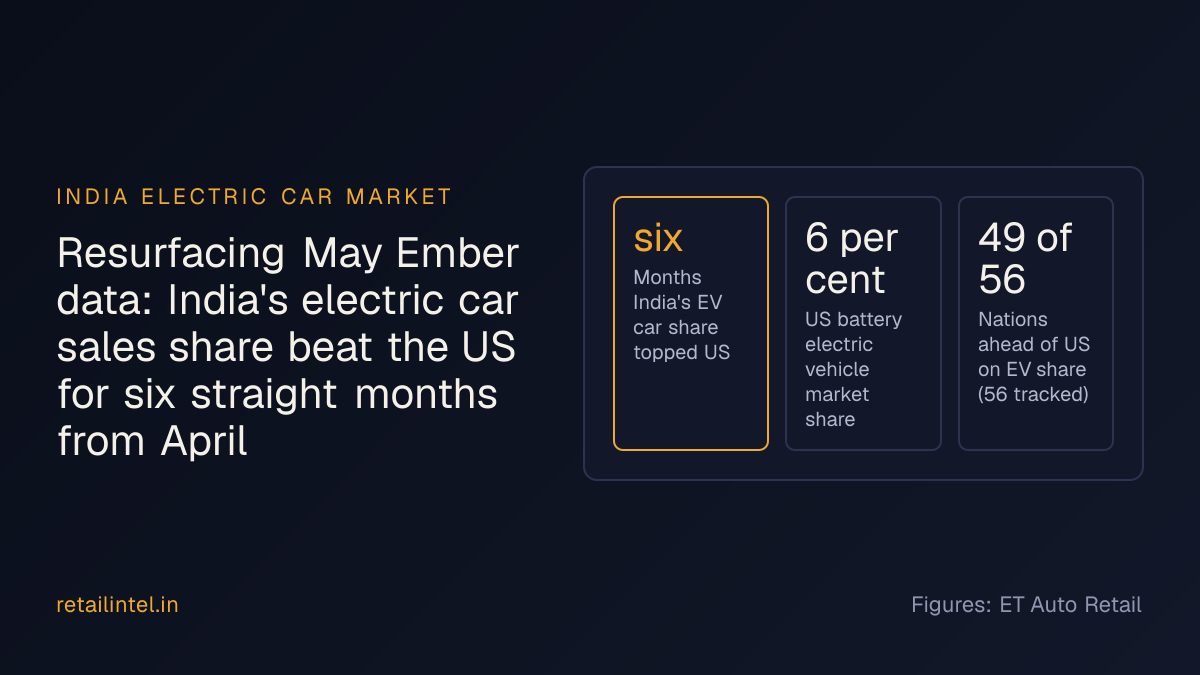
The India electric car market's lead comes as US battery electric vehicle share dropped to 6 per cent following federal incentive rollbacks. That places the US behind 49 of the 56 nations tracked globally.
- Months India's EV car share topped US
- six
- US battery electric vehicle market share
- 6 per cent
- Nations ahead of US on EV share (56 tracked)
- 49 of 56
One email each morning: the day’s top moves in Indian retail, why each matters and what to watch. Free. Stop any time.
Reported figures
From the report. Source details below
| Consecutive months India's EV car share topped US: | six |
|---|
Why it matters to operators and investors
Ember data shows India's electric car share ahead of the US for six straight months from April, while US battery electric share fell to 6% after incentive rollbacks, which supports the India EV demand story but measures share, not volume.
What to watch next
- India's lead over the US extending past the 6 straight months reported, in Ember's next monthly update, would mean the gap is structural for carmakers allocating EVs.
- US battery electric share moving back above the 6% reported in the next monthly data
- Any change to US federal EV incentive policy or reinstated credits
- Indian monthly electric car registrations in the next vehicle registration data
- Number of the 56 tracked nations ahead of the US versus the 49 now behind it
The counter-case
The case against this reading — not reported by the source.
The headline compares shares, not scale, and it flatters India. The US figure is falling because of a policy shock (the federal incentive rollbacks), not because India has done something exceptional. A ratio overtaken from above says little about the strength of India's EV market. India's passenger-car market is much smaller and skewed toward low-priced vehicles, so a modest absolute increase in EV sales can move its share a lot, while the US number moves with a huge base. Six consecutive months is also a short window. It may reflect US pull-forward buying before the incentives ended, followed by a payback slump, rather than a durable structural change. Two further weaknesses: the signal never gives India's own share, so the reader cannot judge how large the lead is, and the headline says 'electric car' while the deck cites US 'battery electric vehicle' share, which suggests the two may not be like-for-like. The 'behind 49 of 56 nations' line mostly shows how many countries, many of them tiny markets, are ahead of the US. It says little about India's competitive position. For a retail desk the read-through to specific companies is thin.
The source
Filed
First seen