
On this page
India raises anti-dumping duties on jute goods from Bangladesh and Nepal
Our read
The duty increase is likely to trigger sourcing reviews and tougher price negotiations; exporter discounting will determine how much Indian mills and packaging buyers feel the shift.
For operators
Recalculate landed costs for jute yarn, hessian and sacking imported into India from Bangladesh or Nepal, and compare domestic alternatives before renewing supply contracts.
Watch
Indian import volumes of covered jute goods from Bangladesh and Nepal
Ask next
Which other rule changes affect Indian retailers this month?The report,
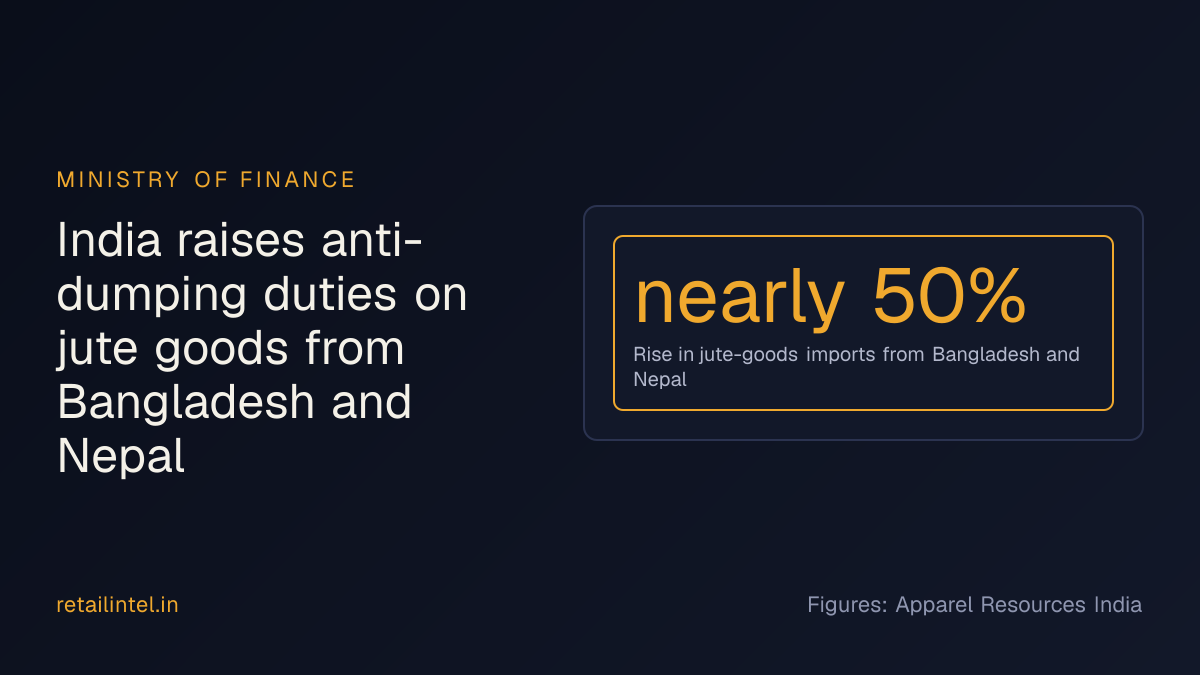
The Ministry of Finance raised anti-dumping duties following a nearly 50% increase in jute-goods imports from Bangladesh and Nepal. The revision covers jute yarn, hessian and sacking; earlier duties were imposed in 2017 and extended in 2022.
- Rise in jute-goods imports from Bangladesh and Nepal
- nearly 50%
One email each morning: the day’s top moves in Indian retail, why each matters and what to watch. Free. Stop any time.
Why it matters to operators
Evaluate partnerships with Indian jute producers to reduce tariff exposure, testing available capacity and post-duty cost advantages before committing capital.
What to watch next
- Domestic mill price changes for jute yarn, hessian and sacking
- Exporter quote reductions or shipment diversions to other markets
- Packaging buyers' announcements of supplier or material changes
Likely next moves
Our read of what comes next — analysis, not reported by the source.
- Indian jute-goods importers are likely to seek domestic quotes before renewing overseas supply contracts.
- Indian jute mills may seek firmer pricing as importers reassess the landed cost of competing supplies.
- Bangladeshi and Nepali jute exporters are likely to renegotiate prices with Indian customers, with some potentially redirecting shipments to other markets.
- Indian packaging buyers may test alternative materials where specifications permit if higher jute costs persist.
The counter-case
The case against this reading — not reported by the source.
Higher duties do not automatically imply a material retail impact. Jute yarn, hessian and sacking are upstream inputs; domestic sourcing, alternative packaging and existing inventories could limit cost pass-through. Import growth alone does not establish significant retailer exposure or pricing pressure.
The source
Published
First seen